The Foundations for Rebuilding Resilient Food Systems
Learn how to develop the New Mindset for Self-Sufficiency from +30 practitioners from around the world.
Basic: Discover the New Mindset for Self-Sufficiency from practising chefs, entrepreneurs, designers and policymakers from around the world
Intermediate: Get feedback on your own regional food initiative including aquaponic restaurants, farmer's markets, urban farms and more
Advanced: Specialize and get guidance and feedback to establish, grow and sustain your own regional food initiative by involving those around you
What you will learn
By enrolling in this training program you will
.
.
.
.
.
.
For whom this training is
This training program is taught primarily in English and can be accessed online, on-demand, anywhere in the world.
Your personal coaching session(s) with our contributors can be in English or other language(s) available including Spanish, Portuguese, Dutch, German, Hindi, or Italian.
and forward thinking restaurateurs including creative cooks, bakers, private chefs, and culinary artists who want to identify and allocate impact and meaning to their projects
including food designers, architects, industrial designers, product designers and visual artists who want to incorporate holistic, systemic thinking into their projects
focused on impact, who dream big and want to make a difference on people and the planet including small/medium sized business owners, photographers, F&B consultants, and marketing teams
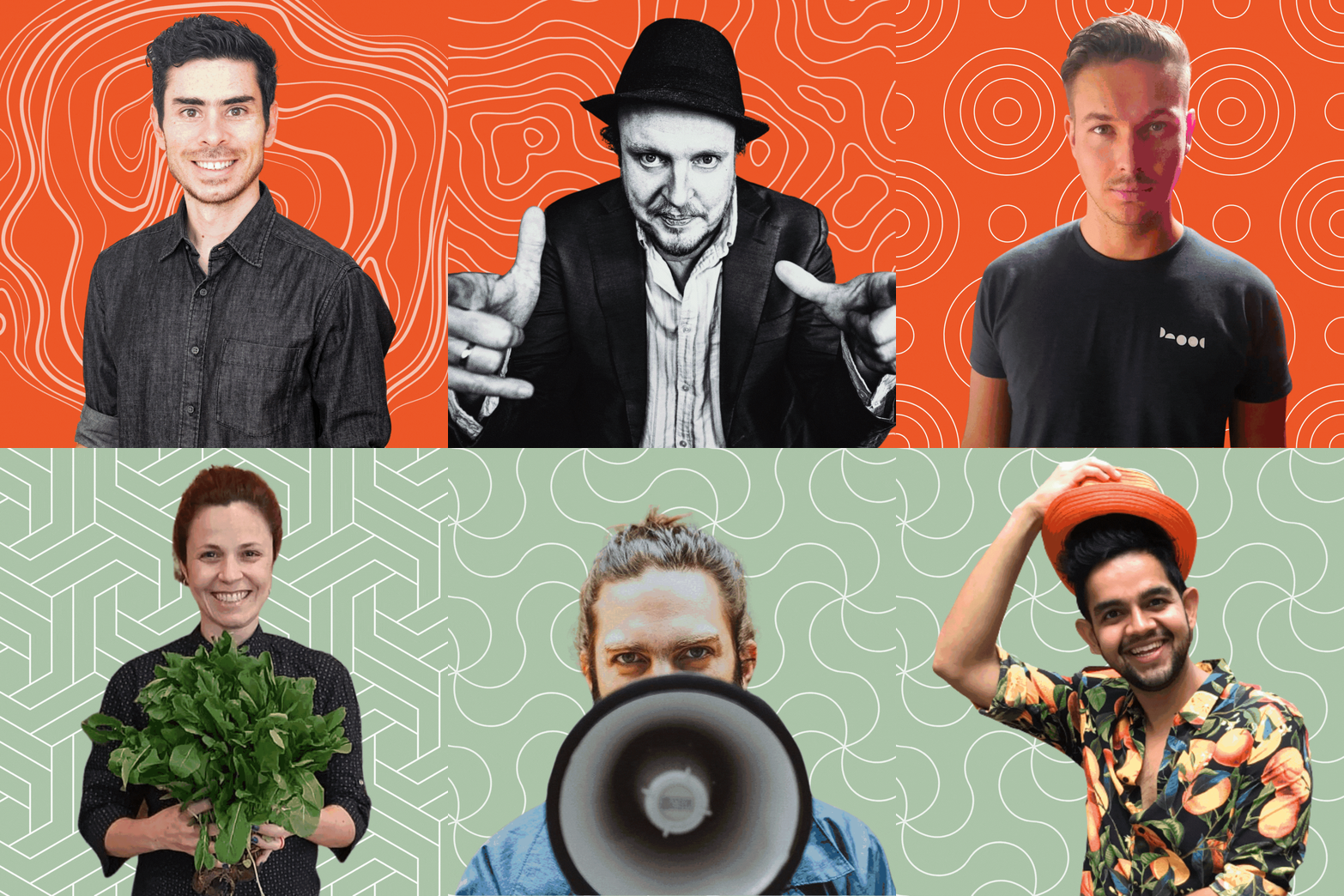
Who you will learn from
A diverse cohort of international practitioners including chefs, designers, entrepreneurs and policy-makers:
- Anna Berti Suman, Research fellow in Sustainable Innovation Law (IT)
- Daniele Carneiro, Executive Director Pont Neuf (BR)
- Ellen Gonzalez, Chef, Researcher and Gastronomic Consultant (BR)
- Fabrizio Biganzoli, European Commission Joint Research Center (IT)
- Dr. Francesca Zampollo, Founder Online School of Food Design (IT)
- Fabiana Figueirido, Atelie das Ideias (BR)
- Federico Casotto, Design Group Italia (IT)
- Fernanda Tubenchlak, Project Coordinator at International Institute for Sustainability (BR)
- Flavia do Valle Brito, Director of Combucá Consultoria (BR)
- Ivan Bursztyn, Postdoctoral Researcher Universidade Federal do Rio de Janeiro (BR)
- Jashan Sippy, Founder Food Design Nation (BE)
- Jasper Udink ten Cate, Creative Chef Consultant (NL)
- Jean-Paul Close, STIR Foundation (NL)
- Jiva Giulia Vitali, Holistic Therapist and Nutritional Advisor (IT)
- Lily Ciric Hoffmann, Culinary Therapy Expert (US)
- Lucas Posada, Cocina Intuitiva (COL)
- Maartje Kreike, Natuurlijk Maartje Food Forest (NL)
- Marcela Correia, CEO K Probiotics (BR)
- Marcus Link, New Foundation Farms (UK)
- Matheus Zanela, Program Coordinator, Global Alliance for the Future of Food (PA)
- Mirna Bamieh, Palestine Hosting Society (ES)
- Monica Geurra Rocha, Comida do Amanhã (BR)
- Nashif Ahmed, Help of Generation (UG)
- Paul Kronenberg, kanthari (IN)
- Paulo Lemos, Lano Alto (BR)
- Payal Biyani, Jaipur Cooking School (IN)
- Teresa Corção, Instituto Maniva (BR)
- Thais Andorffy, Local Greens POA (BR)
- Thiago Nasser, Junta Local (BR)
- Tim Elfring, Phood Farm and Kitchen (NL)
Choose your path
Depending on where you are in your food design journey, choose your path based on your specific needs.
Online course - 1 year access
Certificate of completion
Online course - 1 year access
Certificate of completion
Options for Intermediate and Advanced paths, including:
Personal coaching sessions - to be scheduled with your coaches over 12 month period
Guidance and feedback in setting up your own regional food initiative
Course Curriculum
Click on the chapters below to discover what you will learn through this training program.
What students are saying
"The Foundations of Rebuilding Resilient Food Systems includes a wide range of perspectives and expertise from international teachers. This provided me with a lot of different and interesting insights on the subject. It helped me clearly understand how I can develop this new mindset in the current scenario of our interconnected food systems. The course provides a realistic picture of the current reality of trying to implement innovative and meaningful food initiatives."
FAQs
Can't find an answer? Don't hesitate to ask us anything.
Upon successful enrolment, you will have immediate access to the course content. Lesson content will be released on a weekly schedule, and you can revisit the published video and written material any time, as per your schedule, for upto 365 days from the date of your enrolment.
Yes, this course is designed with a beginner (or even intermediate) level in mind. You’ll only need basic knowledge and the drive to go out into your local food system - your neighbourhood, the farmer's market, a local supermarket, restaurant, or farm! I encourage you to focus on your local region - so you can easily get out of the room and onto the field, there’s no need to complicate things.
Yes! This course is designed to help you understand everything you need to consider in order to develop your own regional food initiative.
Redesigning food systems is an urgent matter, a responsibility and an amazing job opportunity. Through this program, you will get invaluable insights into a food system designer's work and get an idea about the broad working field and a feeling about what you need to get this job done and ongoing. Regional development and food system design in a local context for living (sustainable and regenerative) food systems is becoming increasingly important for:
- The tourism industry co-creating together with the food industry and finding strategic partnerships
- The public sector looking for new ways to make regional food systems and rural areas more sustainable and innovative
- Small, medium-sized businesses, corporates and start-ups who want to reconnect and engage with their local food systems and develop their business model further with a local context
- Educational providers and universities who want to teach new concepts about food sustainability, dive into regenerative food systems and run design sprints with students
- Innovation and marketing managers and business developers who want to expand their horizon on food system design
- Change-makers, designers and young professionals who want to act now and make a difference by diving into new concepts
This course has been designed for all levels of expertise - beginner, intermediate and advances - irrespective of academic or professional background. All you need is yourself, your surrounding food system and the ambition to challenge the status quo.
Yes, you definitely can accommodate this course to your own time and schedule. The training program is designed to be accessible online, in any timezone. Most of the modules are pre-recorded and you can return to them and any additional class material whenever you like, for up to 365 days from initial enrolment. For live coaching sessions for questions and feedback, guidance in your own project, you will schedule your meetings with your instructor as per your mutual availability.
Yes! Upon successful completion of the coursework, you will be issued a Certificate of completion from i-fooddesign (The International Center for Food Design). You may be required to pass a test or qualitative examination with documentation of coursework completed. You can contact us via email at hello@i-fooddesign.com to find out more.
Once you have begun your coursework after successful enrolment in the training program, the i-fooddesign team will be in touch with you to chart out your plan and help schedule your 1-1 coaching sessions.
The International Center for Food Design (i-fooddesign) the reference organisation for the emerging food design discipline. Our mission is to empower the next generation of purpose-driven creative professionals to create a motivated workforce of thought leaders dedicated to bettering our food systems. Through online courses, events, publications, work opportunities and coordination with academic institutions, our member-based network connects multiple roles within agencies, business and government to strengthen the impact of food design within public and private sectors.
Read further
Take the steps to create the world you want to live in.
Subscribe to our mailing list and stay up to date with courses, coaching, products, events, industry news and latest offers.